Our Work

There are a variety of projects happening in the Santa Clara River Watershed through our organization and in conjunction with our partners.

Invasive Species Management

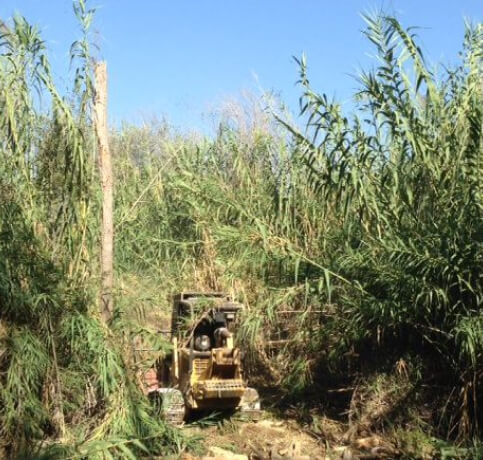
We target the most prolific and accessible species for management.

Habitat Restoration

Restoration and re-vegetation in conservation work can look very different depending on location, season, and technique.
Education and Outreach

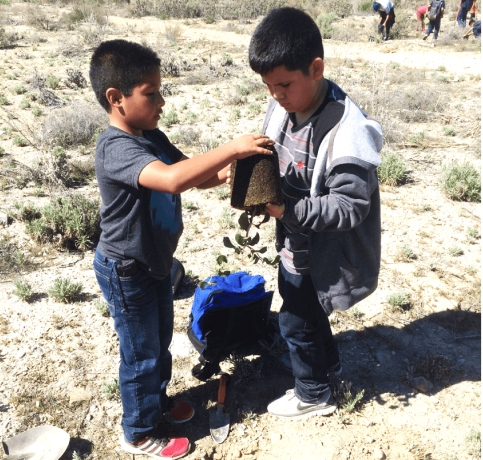
We work with our partners to reach out to schools and communities.
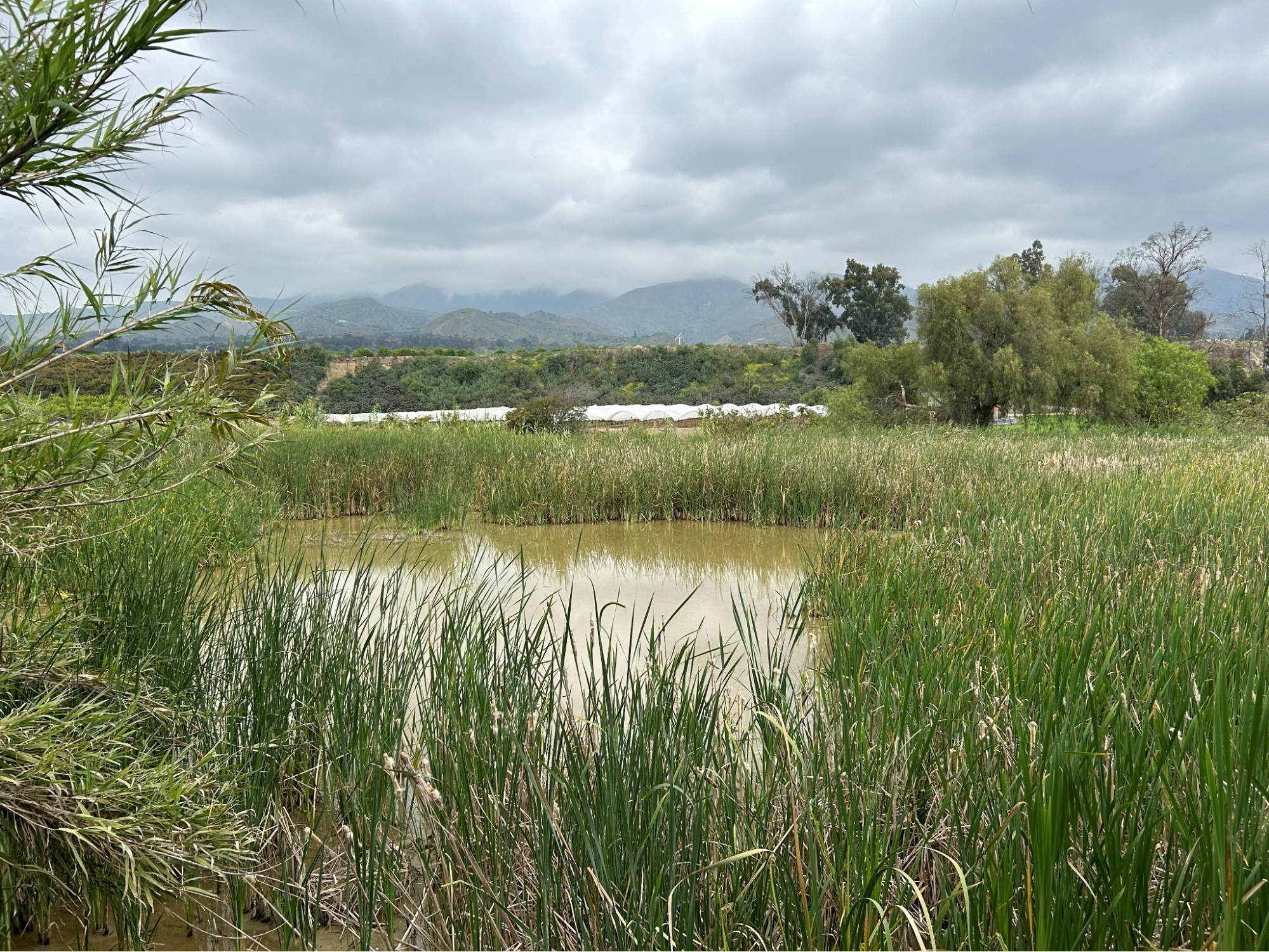
Wetland pond with reeds along the Santa Clara River and mountains under a cloudy sky

Santa Clara River Artesian Site Habitat Restoration Project

Restoring 10.2 acres of wetland habitat to improve water quality and support native wildlife along the Santa Clara River.

Habitat Restoration

Restoration and re-vegetation in conservation work can look very different depending on location, season, and technique.
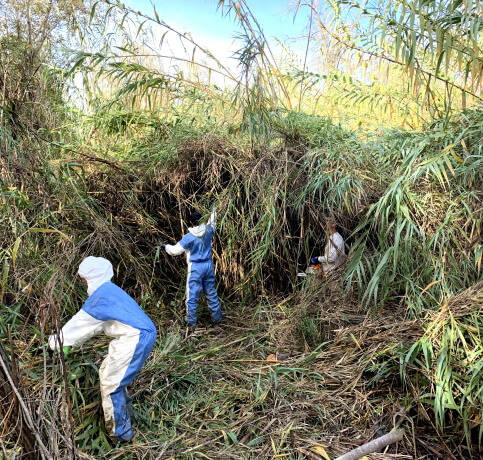
Manual Monotypic Arundo Removal

Invasive Species Management

For the various invasive species found in the Santa Clara River Watershed, we target the most prolific and accessible species for management.  

Some techniques may require full removal using mechanical and chemical application or biocontrol agents.  Other techniques may include boosting native species establishment using restoration and re-vegetation in some areas.  

Below is a list of some specific invasive species found in the Santa Clara River Watershed today:

  • Arundo donax – Giant Reed
  • Tamarix sp. – Saltcedar
  • Delairea odorata – Cape Ivy
  • Salsola tragus – Russian Thistle
  • Ricinus communis – Castor Bean
  • Lepidium latifolium – Perennial Pepperweed
  • Potamopyrgus antipodarum – New Zealand Mud Snail
  • Dreissena rostriformis bugensis – Quagga Mussel
  • Xenopus laevis – African Clawed Frog

Habitat Restoration

Restoration and re-vegetation in conservation work can look very different from place to place, during certain seasons of the year, and between the types of techniques used.

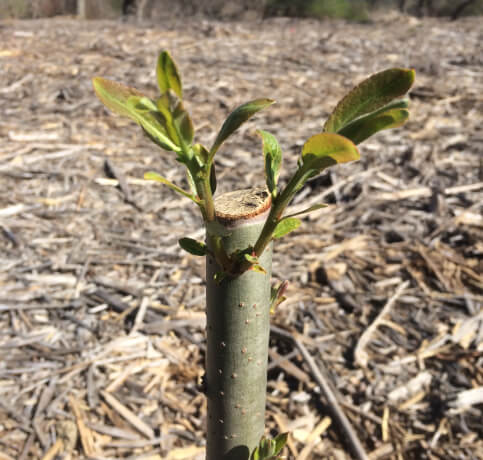
Organizations working to restore the Watershed use methods such as seed collection, seeding, planting, “pole cutting”, and irrigation.  

Monitoring is always coupled with restoration to ensure that the methods used are the most effective for the area and resource requirements

Pole Cutting
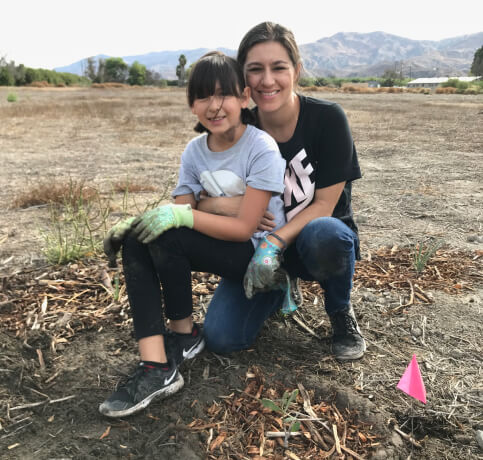
Volunteers

Education and Outreach

Part of our mission is to engage the public to be supportive of conservation of the Watershed. We also wish to inspire an appreciation for the resources and a conservation ethic in our youth.

We work with partners to reach out to schools and communities. We are always looking for grants that support environmental education and getting students out of the classroom to explore their river.  Opportunities include: 

  • Volunteer events at a variety of sites along the river
  • Presentations and lectures for classrooms
  • Outdoor field trips

Santa Clara River Artesian Site Habitat Restoration Project

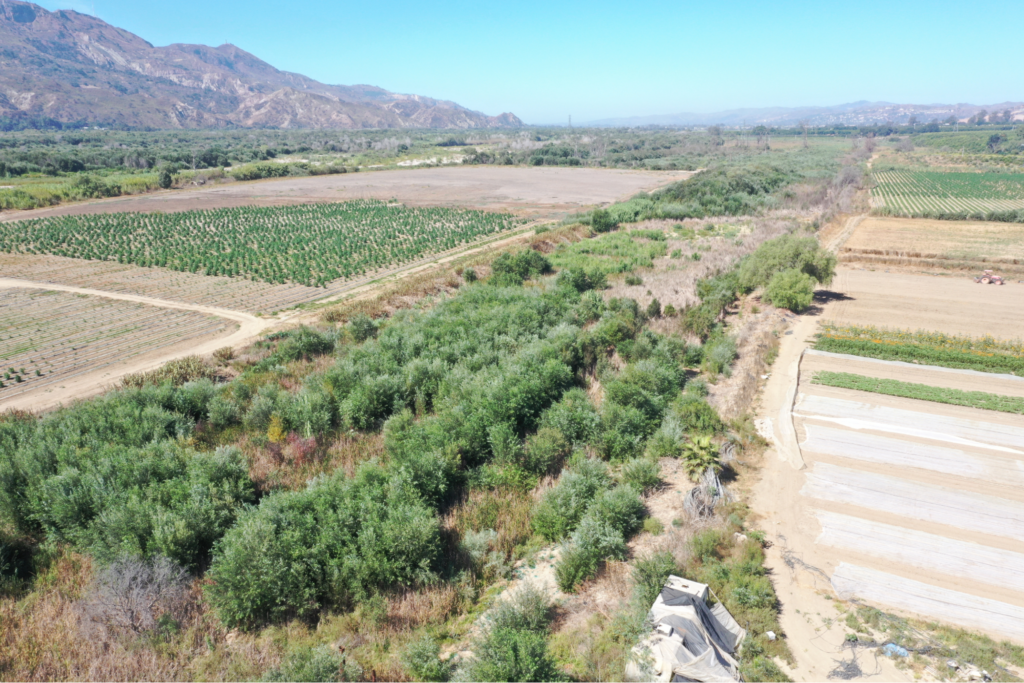
Our Santa Clara RIver Artesian Site Habitat Restoration Project in Santa Paula aims to restore 10.2 acres of wetland habitat along the Santa Clara River. This area impacts up to 20 miles of river downstream. The site was overtaken by invasive species such as giant reed, castor bean, tree tobacco, and salt cedar, which SCRC staff is actively removing and revegetating with native California plant species. This project will benefit local ecosystems in and along the river by promoting species diversity and enhancing water quality. 

This project is following a planting plan that divides the site into five specific habitat types based on soil moisture, including riparian scrub with woodland component, seasonal wetland, a sage scrub buffer boundary, full riparian scrub, and wet meadow.

Aerial view of farmland and riparian habitat at the Santa Clara River Artesian Site Habitat Restoration Project